
It has come to my attention that a sermon preached by Dr. John Robbins, who is the senior pastor of Pulaski Heights United Methodist Church, has been circulating the internet and causing a buzz. Many Christians are praising his message and presenting it as an airtight defense of what transpired at General Conference. His arguments may seem rather convincing and difficult to refute to the layman. Be that as it may, it is of my opinion that Dr. Robbins’s arguments are rife with flaws that need to be addressed. In this article I will address a number of points made in the message and examine their validity. The purpose of this article is not to personally attack Dr. Robbins but to expose the bad arguments that he and others employ to propagate misleading conclusions.
DOES ALL SCRIPTURE CARRY THE SAME WEIGHT OR HAVE EQUAL VALUE?
Dr. Robbins begins his message by asking a rhetorical question about whether a passage in Leviticus regarding leprosy carries the same weight or has the same value as Mary Magdalene’s testimony regarding her witness of the resurrection. The answer that the pastor is looking for is an answer in the negative in order to justify sidestepping passages of Scripture that condemn homosexuality. Though there are a number of informal fallacies that he commits that should be pointed out.
Faulty Conclusion and Jumping to Conclusions
It seems obvious that not every verse of Scripture carries the same weight as others. Though that in no way substantiates the claim that certain passages of Scripture can be respected while others can be conveniently circumvented. While certain passages of Scripture may carry more weight than others that does not mean that less weighty passages are any less authoritative unless they have already been fulfilled or nullified as delineated in the New Testament.
Dr. Robbins seems to suggest that because the good news of Jesus’ resurrection is more significant than purity laws that we have the liberty to choose what Scripture is authoritative and which passages can be ignored willy-nilly. One has a difficult time seeing the connection between understanding that some Scripture has more weight than others, and the notion that we can cast Scripture to the flames that we deem weightless. That is a faulty conclusion that does not follow from the premises–it is comparing apples to oranges.
What needs to be stressed is that Dr. Robbins is not suggesting weighing out various passages of Scripture to discern which texts carries the most weight and holds the most value. Instead what is being proposed is completely ignoring certain texts all together that may be unsettling. So the idea is not to create a hierarchy of significant texts but to decide which parts of Scripture no longer need to be respected and obeyed, which is reckless to say the least.
We can all agree that biblical texts vary in their significance but we have a responsibility to cherish all of Scripture as authoritative because all Scripture is God-breathed. 2 Timothy 3:16 says, “All Scripture is inspired by God and profitable for teaching, for reproof, for correction, for training in righteousness.” When we go about the business of higher criticism to pick apart the Bible in order to make it more palatable for ourselves and society, we are not approaching the revelation of God with intellectual integrity but with disdain.
Now someone might claim that we are no longer bound by the law and that is therefore evidence that certain precepts are subject to change. Not so fast. As cliché as it may sound at this point it is important to remind the reader that God does not change and neither do His moral standards. If God’s moral laws can change or be reversed then we have no hope of determining how we ought to live because what might be true and good today may be evil and bad tomorrow.
It is true that some Old Testament laws have been changed. Jesus changed the dietary laws of the Old Testament (Mk. 7:18; Acts 10:15). Paul has informed us that we are no longer bound to circumcision because baptism is the new rite of passage into the new covenant. Yet just because some laws have been changed does not give people permission to continue changing laws as they see fit.
Consider what Jesus said in Matthew 5:17-19:
Do not think that I came to abolish the Law or the Prophets; I did not come to abolish but to fulfill. For truly I say to you, until heaven and earth pass away, not the smallest letter or stroke shall pass from the Law until all is accomplished. Whoever then annuls one of the least of these commandments, and teaches others to do the same, shall be called least in the kingdom of heaven; but whoever keeps and teaches them, he shall be called great in the kingdom of heaven.
We may no longer be bound to the Old Testament laws but that does not mean that the moral law has been expunged or has become relative to our modern sensibilities. Again Jesus says, “The scribes and the Pharisees have seated themselves in the chair of Moses; therefore all that they tell you, do and observe, but do not do according to their deeds; for they say things and do not do them” (Mt. 23:2-3). The obvious point is that there are still moral laws that God expects people to abide by and obey–not for our salvation but as a response to our salvation.
If we are “New Testament people” who no longer have ties to the laws of yesteryear does that mean we can worship false idols or covet our neighbor’s wife? It is obvious by the law written on our hearts that the moral standards of God do not change even if they make us uncomfortable. We are uncomfortable because God establishes morality and not us. If we are the arbiters of morality then we would never feel a visceral reaction to the standards we adopt, which is very telling regarding those who do not struggle with certain precepts given from on high.
Scripture has solidified the moral law. We know what God expects of us. While we at times need to make inferences based on new information that the Bible does not specifically address, we cannot change or create new moral laws that contradict what has been commanded. God does not give us permission to reinterpret. He commands us to obey.
The bottom line is that every ounce of Scripture is of tremendous value and cannot be ignored. I have heard someone say that all the great theological and philosophical books in the world do not begin to compare to the beauty and wisdom of Leviticus because it is a sacred text imbued with the inspiration of God. I tend to agree.
Relativism and The Slippery Slope Fallacy
A slippery slope fallacy is characterized by an assumption that a negative series of events will follow a particular position or truth claim that is not bore out by the evidence. However, if there is logical reason for concern it is not a fallacy.
Now that the United Methodist Church has made Scripture relative nothing is sacrosanct and we can expect a downward spiral of morality as the Bible continues to be rewritten with each generation and so called contexts to bend to the whims of modern Christians. Now doctrine will be fundamentally weighed and filtered through subjective predilections resulting in nothing short of conformation bias. So, we have an actual slippery slope unfolding before our very eyes.
If the idea is that we pick and choose certain passages and doctrines to follow then the question then becomes who determines the new doctrinal standards? Who is determining which parts of Scripture are heavy and valuable and which parts are weightless and outdated? Presumably any given person who finds an esoteric group of like-minded people to corroborate their views under the guise of the Holy Spirit.
Without the absolute authority of Scripture we no longer have checks and balances. Even appeals to the guidance of the Holy Spirit need to be taken with caution. How many church leaders have said that the reason they left their wives for their mistresses was due to a prompting from the Holy Spirit? This is precisely why Jeremiah warned that “the heart is more deceitful than all else and is desperately sick; who can understand it?” (Jer. 17:9). No doubt that Isaiah had this in mind when he lamented, “Woe to those who call evil good, and good evil; who substitute darkness for light and light for darkness; who substitute bitter for sweet and sweet for bitter!” (5:20).
Another question that arises is how could Dr. Robbins or any pastor under this view expect their congregations to put much value in their interpretations? If people are at liberty to pick and choose which Scripture is valuable then why should I or anyone acquiesce to someone else’s position? What I consider valuable may be different and more compelling than what someone else considers valuable. So, under this view the role of a preacher seems superfluous at best and circumspect at worst.
Now of course I am being facetious, and people are always going to flock to preachers, but the logic of the argument still stands. The fact that people try to convince others of their position shows that deep down they understand that there are standards that everyone should strive to live by. Otherwise no preacher would deliver a sermon of exhortation. Yet with the relative worldview of those like Dr. Robbins there are no true standards because we all pick and choose which parts of Scripture to follow and doctrines to adopt.
Enter spiritual anarchy.
False Dichotomy
Another place in the sermon that Dr. Robbins goes wrong is when he creates a false dichotomy between admitting one’s hypocrisy through a lack of complete biblical fidelity or acquiescent to the notion that we all pick and choose doctrines to obey that make the most sense to us. Though there is no need to be put into a corner with these two choices because the examples he uses do not actually create an either/or scenario.
Women Speaking in Church
The first example that he uses is the commandment that women should not speak in church in 1 Corinthians 14:34. He argues that those who think that women should be able to speak in church are being inconsistent when they claim that homosexuals should not have the right to be married or ordained. He claims that in both circumstances people refuse to obey the respective Scriptures and are therefore not abiding by strict biblical mandates.
The problem is that this argument is simply not true. When this text is properly understood it shows that the admonition does not regard all women at all times and therefore women do have a right to speak in church. So, there is no inconsistency by holding both positions that women have the liberty to speak in church and God has prohibited same-sex marriages.
First, it should be noted that some people misunderstand this passage and assume that Paul was forbidding women to speak in church while they had the right to speak in the confines of their homes. Though in the early years of the Jesus movement congregations most likely met in homes and therefore there was little distinction between church and home. In other words, if women were speaking in their homes they were speaking in church.
Second, 1 Corinthians 11:2-16 is in reference to life in the church which entails proper etiquette for women when they pray and prophesy. So, how can a woman pray or prophesy if is she cannot openly speak in church? Clearly there is nothing forbidding women from speaking in church in this context.
Third, when put into proper context it becomes clear that Paul’s admonition was only addressing women who were interrupting congregational meetings with questions that proved to be a distraction. The emphasis here is not complete and total silence by all women but order and humility. The church at Corinth was chaotic because of such behaviors which compelled Paul to address the problem.
In the final analysis the admonition is not about women being silent in the church in a typical setting but only when such behavior is causing confusion and chaos. So, there is no need to pick and choose texts to adopt when properly understood. They should both be adhered to.
Divorce and Remarriage
The next argument Dr. Robbins makes is that he has officiated the weddings of divorced people and those living together out of wedlock without reproof. The idea seems to be that remarriage has become an accepted behavior in the church despite clear biblical mandates against remarriage so homosexuality should be accepted too. Again the implication is to either become a hypocrite by sidestepping mandates against remarriage and not homosexuality, or to admit that Scripture must be reinterpreted with the right to pick and choose what is applicable today. I admit that a soft position on remarriage has become commonplace in society and the church, but I dismiss this false dichotomy for a number of reasons.
First, if the suggestion is to take a softer position on same-sex marriages since Christians have reluctantly embraced remarriage, I argue that the motivation is going in the wrong direction. The church should not be moving towards a more tolerate position on sin but should be reversing course to become more strict. Otherwise the church is going to keep adopting the moral views of a world living in sin and redefining sin to assuage our consciences.
It is without question that we should show grace to each other and our neighbors. That is true in the relationships that people have with those they love. Though there is a fine line between showing grace and justifying sin (Rom. 6:1). Certain boundaries have been put into place by God for a reason and they must be respected.
Second, the biblical witness notes particular circumstances that allow for divorce or remarriage. While more narrow than some would prefer there is some, albeit scant, room for interpretation. Yet the holy texts are everything but ambiguous on the subject of homosexuality. Every single text on the subject is firm that such behavior is open rebellion of the created order and therefore sinful. The only way someone could read anything else into the biblical texts is through esigesis.
The fact that people have not reproved pastors for various weddings that they have officiated does not mean that their actions are acceptable. We need to stop lowering the bar while calling it grace so that people are more comfortable, and start encouraging people to pursue God more fervently through holy living even when it does not make sense or is difficult.
God Don’t Make No Junk
The next line of argumentation from Dr. Robbins has to do with people’s sexual orientation. He uses the old colloquialism “God don’t make no junk” to argue that people who are born with a same-sex attraction were created that way by God. One wonders how such a position coincides with the newest assertion that gender and sexuality are fluid and can change at any given moment, but I digress.
The suggestion that people should have the freedom to live out their sexuality in alignment with their predispositions seems shortsighted. Giving into our desires just because we are predisposed to them is never good. If that were true then men all over the world would be justified in having copious amounts of sex with as many women as possible. We all have temptations and desires that are unhealthy and forbidden and those who suffer from a same-sex attraction are no exception.
I find it odd when people argue that behaviors such as racism, infidelity, incest, greed, or hate are immoral predispositions that need to be hemmed in and transformed by the grace of God, but then go on to claim that having a same-sex attraction is perfectly natural because they were created that way. No one would argue that pedophiles’ attraction to children is natural and ordained by God because that is how they were created, yet for some reason homosexuality always gets a pass.
So, yes–God does not make junk and those who are born with a same-sex attract are still loved by God. Though that does not mean homosexuals or anyone with a proclivity towards sin are excused when they embrace the flesh over the spirit.
A history of misunderstanding and misusing Scripture
Moving on to the next series of argumentation is the insinuation that the church has historically abused Scripture to support positions that we now deem misguided and sinful. The two examples that Dr. Robbins uses is slavery and the subjugation of women.
The historical abuse of Scripture to support slavery is often overemphasized. No one argues against the fact that a good many Christians supported slavery and used Scripture to support their position. However, such a position was never unanimous. Historians such as Mark Noll have explained that supporting slavery with Scripture was incredibly controversial and never a consensus.1 Christians in the northern regions of the United States along with those in countries like Britain and Canada were appalled at such a misinterpretation. Of course that makes perfect sense when you understand that the abolition of slavery was spearheaded by Christians.
Not only that but it should be mentioned that slavery and homosexuality are nothing alike. A person’s ethnicity is an innate factor that is beyond their control. No one can change their ethnicity nor should they. Though a person’s sexuality is a behavior that can be controlled or changed. Moreover, according to the new LGBTQ+ movement sexuality is fluid and does change.
Finally, when considering the church’s position it is clear that while there were some people who abused Scripture to justify the ownership of slaves there were many Christians who opposed such misinterpretations and fought to liberate slaves. Yet the church has unanimously held the position that same-sex marriages are an affront to God because it is sinful. A person has to dig deep and long to find a shred of evidence that shows a moderate position on the subject. Only when the world has changed so much in this regard has the church decided to shift its values, which ought to say something about such a movement.
The same point can be made regarding the subjugation of women but here is the bottom line. Even if it were true that the church has by and large misinterpreted the Bible only to correct course later that does not give the church license to (1) pursue a more palatable direction on sexuality in the so-called name of grace (2) nor does it actually prove or substantiate that such a direction is coherent with Scripture and facilitated by the Holy Spirit. The only thing it would mean is that the church has made mistakes in the past and needs to strive to ensure that such a blunder does not happen again, which just as well could mean adhering to a traditional understanding of marriage instead of being blown about by every wind of doctrine.
Literal or Not Literal, That is the Question
The next bout of assertions has to do with the absurdity of taking Scripture literal. The pastor goes on to say that if people were to be consistently literal about biblical precepts then banks could not collect interest and people could not wear clothing with different fabrics and so forth. While this argument is meant to result in a ‘gotcha!’ moment it simply does not cut muster.
It seems almost too obvious to point out that everyone understands that certain passages of Scripture are not meant to be taken literal. When Jesus says that He is the door everyone knows that He is speaking figuratively. No one looks for a doorknob on His person. Though to claim that we should not take some moral laws literally because other laws have been rendered void is sleight of hand.
At risk of sounding redundant it should be explained that there is a difference between the ceremonial law and the moral law. There is a stark difference between laws that forbid eating pork and sexual relationships. The ceremonial laws were meant for Israel in a particular time and place and not the Christian church.
Paul writes in Galatians 3:23-26 that Christians are not under the law because Jesus Christ has fulfilled the law. So, of course ceremonial laws such as dietary laws and clothing restrictions do not apply to the modern church. Though the moral law still stands and applies. God is clear that there are expectations for how we live and sexual behaviors such as homosexuality is addressed on numerous occasions in both the Old and the New Testaments.
In case there is a rebuttal that homosexuality is merely a ceremonial law that has been transcended or nullified, consider the following except from Dr. Norman Geisler2:
First of all, if laws against homosexuality were merely ceremonial (and therefore abolished), then rape, incest, and bestiality would not be morally wrong either, since they are condemned in the same chapter with homosexual sins (Lev. 18:6-14, 22-23).
Second, homosexual sins among Gentiles were also condemned by God (Rom. 1:26), and they did not have the ceremonial law (Rom. 2:12-15). It was for this reason that God brought judgment on the Canaanites (Gen. 18:1-3, 25).
Third, even in the Jewish levitical law there was as difference in punishment for violating the ceremonial law of eating pork or shrimp (which was a few days isolation) and that for homosexuality which was capital punishment (Lev. 18:29).
Fourth, Jesus changed the dietary laws of the OT (Mark 7:18; Acts 10:15), but the moral prohibitions against homosexuality are still enjoined on believers in the NT (Rom. 1:26-27; 1 Cor. 6:9; 1 Tim. 1:10; Jude 7).
It is a noble thing to err on the side of grace and we should all adopt that kindness. Though that is not what is being asked here. What is being asked is to ignore clearly mandated prohibitions and calling it grace to not only justify disobedience but to give adherents of this position the impression that they are good and gracious people because they have taken a live and let live attitude. Anyone could argue that we should err on the side of grace for any sin under the sun but that would be a perversion of God’s will and the furthest thing from grace.
A message of Love
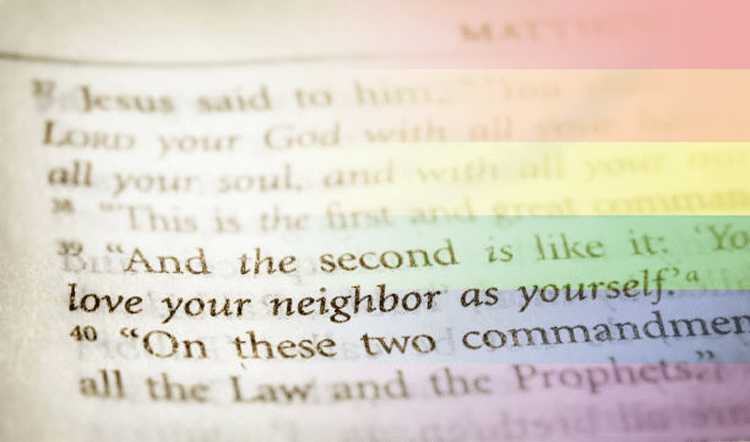
The final argument is the most used argument propounded by progressives. Dr. Robbins starts to wrap up his sermon by saying that followers of Christ need to model love, mercy, grace, and forgiveness. While that is true it is not true that we can pigeon hole any sinful behavior we like into categories of love, mercy, grace, and forgiveness.
First, because embracing sin in others is the furthest thing from love, mercy, and grace. Encouraging people to embrace their homosexuality not only causes separation between them and God but has real life ramifications. If you are interested in a detailed treatment of this subject you can read another article I wrote titled “Is Accepting Homosexuality Really Loving Your Neighbor?“
Second, people can only be warm to this argument if they already accept homosexuality as a moral good. For example, what if I argued to accept open polygamy or incest in the name of love, mercy, grace, and forgiveness. Most likely I would be met with a slew of reasons why such behaviors are not biblically ordained or healthy, which would be true, but again homosexuality seems to be exempt from this kind of scrutiny.
The same could be said for the final lines of the sermon that stress that the United Methodist Church is a big tent for people of all kinds of different positions and sins. While it seems noble at first, no one would support outspoken racists or business owners who exploit the poor due to a shared nature of sin (remember we are not talking about the church being a place where sinners come to find forgiveness in this context, but a place where sinners can gather without reproach or admonishment). When one really sits with the implications of this denominational line it is easy to see that it is rife with errors.
Closing Words
I respect that Dr. Robbins and other church leaders for encouraging unity. I believe unity is a beautiful thing. Though everyone has a line that they are not willing to cross even for the sake of unity. When progressives ignore the convictions of Christians in the name of unity and brotherhood it starts to sound like an empty and self-righteous platitude. What people want is unity in holiness as much as love, and whether people believe the United Methodist Church can offer that has yet to be seen.






 Amor Dei
Leave a comment